
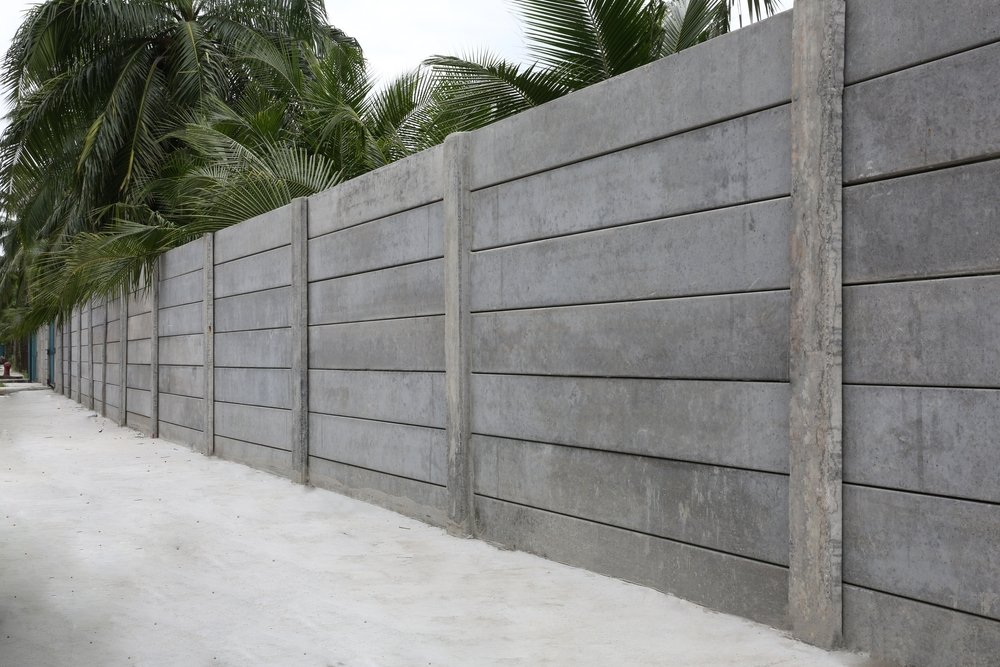
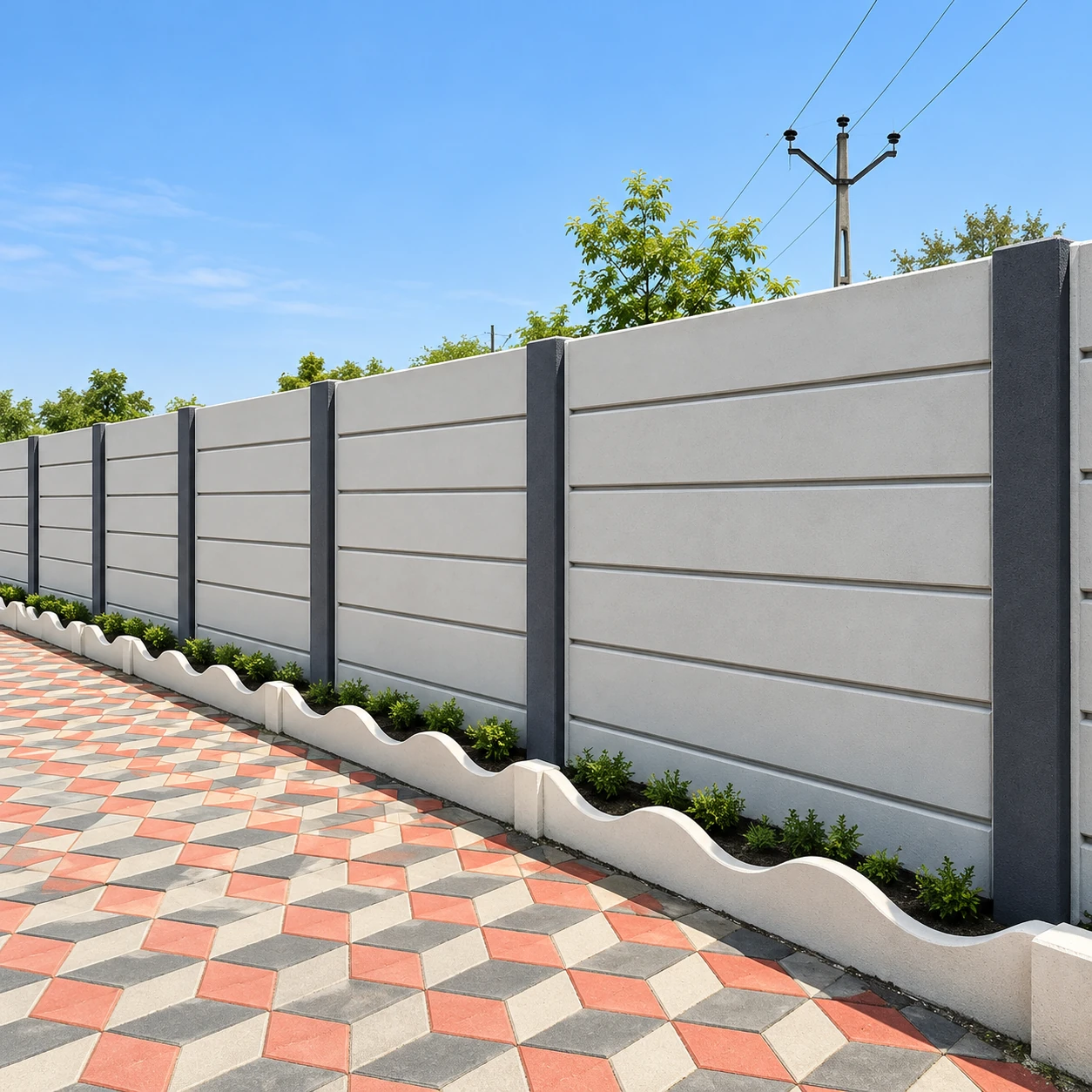
Precast Compound Wall Cost in Gujarat: What Affects the Final Price?
Planning to install a boundary wall around your residential plot, factory, warehouse, agricultural land, or commercial property? Understanding the precast compound wall cost in Gujarat can help you plan your construction budget and choose the right solution for your project.
Precast compound walls are becoming a practical option for property owners, builders, contractors, and industrial developers who want to reduce on-site construction work. These walls are manufactured in advance using concrete components, transported to the project location, and installed according to the required layout.
However, the price of a precast compound wall is not the same for every project. Wall height, panel specifications, RCC posts, foundation requirements, transportation distance, installation, and total boundary length can all affect the final quotation.
In this guide, we explain the major factors that influence precast compound wall prices in Gujarat and how you can estimate your project requirements before contacting a manufacturer.
What Is the Cost of a Precast Compound Wall in Gujarat?
The cost of a precast compound wall in Gujarat depends on the required wall height, concrete panel specifications, RCC posts, foundation work, transportation, installation, and total boundary length. Larger projects may benefit from better production and delivery planning, while difficult site conditions or customized specifications can increase costs. To get an accurate estimate, measure the total boundary length, confirm the required wall height, and request a detailed quotation from a precast compound wall manufacturer.
There is no single price that applies to every property. The most reliable way to calculate your budget is to compare quotations based on the same wall specifications and project requirements.
1. Wall Height and Design
Wall height is one of the first factors that affects the overall cost.
A low boundary wall for a residential plot may require different panel dimensions and support arrangements than a taller wall surrounding a factory, warehouse, or industrial site.
As the required height changes, the manufacturer may need to adjust panel specifications, RCC post dimensions, reinforcement, and foundation design.
The wall design can also influence the price. Standard panel designs may be more economical than customized designs that require additional moulding or manufacturing work.
Before requesting a quotation, decide:
-
The required wall height
-
The preferred panel design
-
The desired surface finish
-
Whether any customized features are necessary
-
The intended purpose of the wall
A suitable specification should balance your budget with the structural and functional requirements of the site.
2. Total Boundary Length and Project Size
The total length of your boundary is another important pricing factor.
A residential plot may need only a short boundary wall, whereas an industrial property, warehouse, solar plant, or large land parcel may require several hundred metres or more.
The total quantity of panels and posts depends on the boundary layout, panel dimensions, corners, gates, and openings.
Larger orders may allow more efficient manufacturing, loading, and transportation planning. However, a lower unit price is not guaranteed because delivery distance, site accessibility, product specifications, and installation requirements also matter.
To help the manufacturer prepare an estimate, provide:
-
Total boundary length
-
Required wall height
-
Number and width of gates
-
Site location
-
Ground conditions
-
Any special design requirements
Accurate measurements make it easier to estimate the material quantity and reduce avoidable changes after ordering.
3. Quality of Concrete and Reinforcement
The quality of the concrete and reinforcement used in precast panels and posts can affect both price and long-term performance.
When comparing suppliers, do not focus only on the lowest quotation. Ask about the product specifications and quality-control procedures used during manufacturing.
Important factors include:
-
Concrete mix and specified strength
-
Reinforcement specifications
-
Panel dimensions and thickness
-
RCC post dimensions
-
Mould quality
-
Curing practices
-
Inspection for visible defects
The correct specifications depend on the wall design, height, loading conditions, soil, and exposure to the environment.
A qualified professional should determine the appropriate structural requirements where necessary. Selecting a wall purely because it is cheaper can lead to poor value if the product does not suit the site conditions.
4. RCC Posts and Foundation Requirements
Precast compound walls generally use supporting posts to hold the panels in position. The posts must be installed according to the manufacturer's system and the project's ground conditions.
Foundation requirements can vary depending on soil strength, wall height, post spacing, ground levels, and other site-specific factors.
Some projects may have straightforward installation conditions, while others may require additional excavation, foundation work, or adjustments for uneven terrain.
These requirements can affect the overall RCC compound wall cost.
Before finalizing your order, ask whether the quotation includes foundation work, post installation, excavation, and any other necessary site preparation.
Clear information at this stage helps prevent unexpected expenses during installation.
5. Transportation and Delivery Charges
Transportation is an important part of the total cost because precast panels and posts need to be moved from the manufacturing facility to the project site.
The final delivery charge may depend on:
-
Distance from the manufacturing facility
-
Quantity of panels and posts
-
Vehicle requirements
-
Loading and unloading arrangements
-
Road access
-
Site accessibility
-
Delivery scheduling
For projects in Ahmedabad, Gandhinagar, Vadodara, Surat, Rajkot, Sanand, or other locations in Gujarat, the actual delivery cost will depend on the manufacturer's dispatch location and the destination.
For this reason, ask for a location-specific quotation rather than assuming that the same delivery rate applies across Gujarat.
6. Precast Compound Wall Installation Cost
The installation method can also influence your budget.
Precast panels are manufactured before they reach the site, which can reduce the amount of conventional masonry work required. However, installation still requires proper planning, equipment or handling arrangements where needed, suitable foundations, and correct positioning of the posts and panels.
The total installation cost may depend on:
-
Site preparation
-
Labour requirements
-
Ground conditions
-
Installation equipment
-
Wall height
-
Access for vehicles and equipment
-
Project size
-
Foundation specifications
Ask whether the manufacturer provides installation services or supplies only the precast materials.
A detailed quotation should clearly separate material costs from installation and foundation costs wherever possible.
7. Site Conditions and Accessibility
Not every project site is equally easy to access.
A level plot with convenient vehicle access may be easier to work on than a sloping site, a property with restricted entry, or land with difficult soil conditions.
Uneven ground may require additional layout planning. Existing structures, drainage channels, underground utilities, and nearby roads can also affect the installation process.
Before ordering a precast boundary wall, share accurate information about the site with the manufacturer.
Where necessary, arrange a site inspection so that the installation method and any additional work can be assessed before the quotation is finalized.
8. Customized Panels and Special Requirements
Standard precast panels can be a practical choice for many projects, but some properties require specific designs or dimensions.
Customization may be requested for residential developments, commercial properties, industrial premises, or projects with particular appearance or layout requirements.
Depending on the manufacturer, customization may involve:
-
Different panel designs
-
Special dimensions
-
Non-standard wall heights
-
Decorative finishes
-
Particular post arrangements
-
Project-specific specifications
Customized components may require additional manufacturing preparation or time. Discuss these requirements before production begins so the price and delivery schedule can be confirmed.
9. Precast Compound Wall vs Traditional Brick Wall: Which Is More Cost-Effective?
Both precast compound walls and traditional brick walls can be suitable for different projects. The better option depends on the site, required design, labour costs, installation schedule, and total project budget.
| Factor | Precast Compound Wall | Traditional Brick Wall |
|---|---|---|
| Construction method | Pre-manufactured concrete components | Mainly constructed on-site |
| Installation time | Generally faster in suitable conditions | Usually requires more on-site work |
| Labour requirements | Focused on installation and site preparation | Includes masonry and finishing |
| Finishing | Depends on the panel finish selected | May require plastering or other finishing |
| Transportation | Panels and posts must be delivered | Bricks and other materials must be delivered |
| Best comparison method | Complete installed project cost | Complete installed project cost |
To determine which option is more economical, compare the complete cost of both systems rather than comparing only the panel price with the price of bricks.
Include materials, foundations, labour, transportation, finishing, installation time, and any maintenance requirements relevant to the project.
10. How to Estimate Your Precast Compound Wall Budget
You can prepare for a quotation by collecting a few basic project details.
Step 1: Measure the boundary. Determine the total boundary length and identify the locations of gates and openings.
Step 2: Confirm the wall height. Decide what height is required for the property's intended use and applicable requirements.
Step 3: Select the specifications. Discuss panel dimensions, concrete quality, RCC posts, and available designs with the manufacturer.
Step 4: Assess the site. Consider soil conditions, slope, accessibility, drainage, and foundation requirements.
Step 5: Confirm delivery and installation. Ask about transportation, unloading, foundation work, labour, and installation services.
Step 6: Request a detailed quotation. Compare suppliers using the same specifications and check exactly what each price includes.
A simple estimate should account for the following:
Total project cost = precast panels and posts + foundation work + transportation + installation + other applicable charges.
This is a budgeting framework, not a fixed market rate. The actual cost must be confirmed using your project's specifications and current supplier quotation.
11. How to Choose the Right Precast Compound Wall Manufacturer in Gujarat
Choosing a manufacturer is just as important as choosing the wall design.
Before placing an order, consider the following points:
-
Manufacturing quality: Ask about concrete specifications, reinforcement, curing, and inspection.
-
Product options: Check whether the available panel designs and dimensions suit your project.
-
Project experience: Ask about previous projects of a similar size or type.
-
Production capacity: Confirm whether the required quantity can be manufactured within your timeline.
-
Delivery arrangements: Clarify transportation, unloading, and dispatch schedules.
-
Installation support: Confirm whether installation is available and what it includes.
-
Transparent pricing: Request a detailed quotation covering the complete scope of work.
A reliable supplier should be willing to explain the product specifications, delivery schedule, and project costs clearly.
Why Consider Fortune Precast for Your Project?
Fortune Precast offers precast boundary wall solutions for projects that require a practical approach to property boundaries.
Whether you are planning a residential plot, commercial development, factory, warehouse, agricultural property, or larger project, the right wall specification should be selected according to your site conditions, required height, boundary length, and budget.
Discuss your project requirements with Fortune Precast to understand the available options and request a quotation based on your location and specifications.
Get a Precast Compound Wall Quotation from Fortune Precast
Planning a boundary wall in Gujarat? Start by confirming your required wall length, height, location, and installation requirements.
The Fortune Precast team can help you discuss suitable precast boundary wall options and the details needed to prepare a project-specific estimate.
Contact Fortune Precast today to discuss your project and request a quotation.
Visit: https://www.fortuneprecast.com/contact-us.php
Share your project location, approximate boundary length, required wall height, and whether you need installation support to help the team understand your requirements.
Conclusion
The cost of a precast compound wall in Gujarat depends on several factors, including wall height, concrete and reinforcement specifications, RCC posts, foundation work, transportation, installation, and site conditions.
The most effective way to control your budget is to define your requirements clearly, compare quotations based on matching specifications, and confirm all inclusions before placing your order.
Precast compound walls can be a practical alternative to conventional masonry for many residential, commercial, and industrial projects because they reduce the amount of wall construction performed on-site.
If you are planning a new boundary wall, contact Fortune Precast to discuss your project requirements and explore a suitable solution for your property.
Frequently Asked Questions (FAQ)
Suggested image alt text: Precast concrete compound wall panels for residential and industrial projects in Gujarat